Thruster
How to Do a Thruster
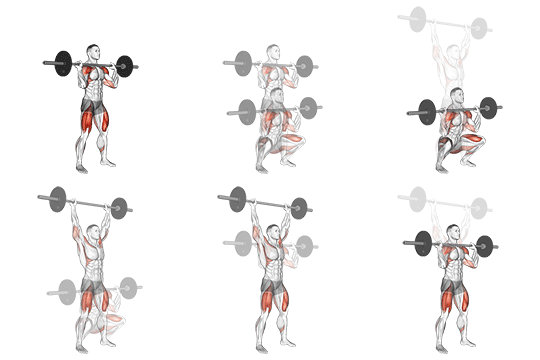
Set the front rack: hold the barbell or weights at shoulder height with the feet in a comfortable squat stance.
Brace and squat: keep the load supported, bend the hips and knees, and descend through a controlled front-squat range.
Drive out of the bottom: extend the knees and hips powerfully while maintaining whole-foot pressure.
Transfer leg drive into the load: allow lower-body acceleration to move the weight off the shoulders before the arms press.
Finish overhead: extend the elbows and bring the load into a stable position over the body.
Return the load to the shoulders: lower under control and receive it in the front-rack position.
Begin the next rep only after the load is racked: connect repetitions smoothly without dropping into the squat before the weight is controlled.
Form Check & Technique
DO THIS (Technique Tips)
- Secure the front rack.
- Brace before squatting.
- Keep whole-foot pressure.
- Drive hard with the legs.
- Press after the leg drive.
- Finish stacked overhead.
- Return to the shoulders before the next squat.
- Practice front squat and push press separately if timing breaks.
AVOID THIS (Common Mistakes)
- Pressing Before the Legs Finish — Fix: extend the hips and knees powerfully before the arms take over.
- Pausing Completely Between Squat and Press — Fix: blend the leg drive into the overhead phase.
- Heels Lifting in the Squat — Fix: reduce load or adjust stance and mobility demands.
- Knees Collapsing Inward — Fix: maintain stable tracking with the feet.
- Load Drifting Forward Overhead — Fix: finish with it stacked over the body.
- Dropping Into the Next Squat Too Early — Fix: receive the load at the shoulders before descending.
- Using a Load That Breaks Timing — Fix: reduce weight and practice front squats plus push presses.
About Thruster
The thruster is a full-body compound exercise that combines a front squat with an overhead press in one continuous movement. It is commonly performed with a barbell but can also use dumbbells, kettlebells, or other implements. The quadriceps and glutes drive the squat and leg extension, while the shoulders and triceps finish the press and the core and upper back stabilize the load. Efficient thruster form uses the legs to accelerate the weight out of the squat before the arms take over, creating a smooth transition rather than a front squat followed by a separate strict press.
Thruster Muscles Worked
The thruster links lower-body and upper-body force.
- The quadriceps and glutes produce the squat and explosive leg drive, the shoulders and triceps finish the overhead press, and the core and upper back stabilize the torso and transmit force between the two phases.
- Because many large muscle groups work through a large range, thrusters can be used for strength, power, or conditioning depending on load and rep scheme.
Sets & Reps Guidance
Technique / Learning
Technique: 3–5 sets of 3–5 light thrusters, optionally paired with front-squat and push-press drills.
Strength Focus
Strength / power: 3–5 sets of 3–6 reps with a load that allows a strong front squat and efficient leg-to-press transfer.
Muscle Growth (Hypertrophy)
Conditioning / muscle endurance: 3–5 sets of 6–12 reps using a lighter load that preserves rack and overhead positions.
General training baseline. Need.fit automatically adjusts exact sets, reps, and working weight based on your individual fitness level, recovery, and progress over time.
Exercise Variations & Alternatives
Front Squat
The lower-body squat component of a thruster without the overhead press.
Overhead Press
An upper-body press without the squat and explosive leg drive.
Kettlebell Swing
A ballistic hip-hinge power exercise with no overhead press in the standard version.
Burpee
A bodyweight full-body conditioning movement.
Barbell Back Squat
Learn barbell back squat form, muscles worked, rack setup, stance, bracing, squat depth, common mistakes, variations, and practical sets and reps.
Goblet Squat
Learn proper goblet squat form, muscles worked, dumbbell or kettlebell setup, stance and depth cues, common mistakes, variations, and sets and reps.
Thruster vs Front Squat
A front squat ends when you stand with the weight in the rack. A thruster continues that leg drive directly into an overhead press, adding shoulder, triceps, coordination, and conditioning demands.
Thruster vs Push Press
A push press starts from standing and uses a shallow dip-and-drive. A thruster begins with a full front squat before using the leg drive to press overhead.
Why Thruster Timing Matters
Pressing too early makes the shoulders do work that the legs could provide. Efficient reps use powerful hip and knee extension to accelerate the load before the arms finish the press.
How Deep Should You Squat in a Thruster?
Use a front-squat depth you can control while keeping the load secure and the feet planted. Sport standards may specify below-parallel depth, but general training should match mobility and technique.
Barbell vs Dumbbell Thruster
Barbells connect both hands to one implement and are straightforward to load. Dumbbells let each arm stabilize independently and may feel more comfortable for some wrists and shoulders.
Thruster Breathing and Cycling
For heavier reps, reset the brace before each squat. For conditioning sets, use a repeatable breathing rhythm while keeping the rack and overhead positions controlled.
Thruster Alternatives
Front squats plus push presses, dumbbell thrusters, kettlebell thrusters, wall balls, and squat-to-press variations can train similar full-body patterns with different loading demands.
Thruster Benefits
Thrusters train lower- and upper-body strength together, reinforce force transfer from the legs through the trunk, and can create a strong conditioning stimulus with lighter loads and higher repetitions.
Sources & References
- [1]
- [2]
- [3]