
Kettlebell Swing
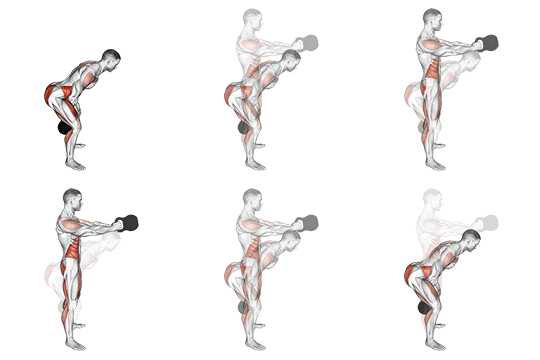
How to Do a Kettlebell Swing
Set the kettlebell in front: stand about one foot behind the bell with feet around shoulder width and the handle angled toward you.
Hinge to grip it: push the hips backward, keep the feet planted, and take a two-hand grip while the kettlebell remains in front of the body.
Hike the bell back: pull it high between the thighs like a football hike rather than letting it drop toward the knees.
Snap the hips forward: extend the hips and knees powerfully and finish standing tall.
Let the kettlebell float: keep the arms long and allow lower-body power to send the bell to roughly chest or shoulder height.
Guide the bell back: wait for it to fall, then hinge as the arms approach the torso and send the bell between the legs.
Repeat rhythmically: keep the hinge crisp, feet planted, and finish each repetition tall without leaning backward.
Form Check & Technique
DO THIS (Technique Tips)
- Hinge, do not squat.
- Hike the bell high.
- Snap the hips.
- Keep the arms long.
- Let the bell float.
- Stand tall without leaning back.
- Wait for the bell before hinging again.
- Use crisp reps before high-volume intervals.
AVOID THIS (Common Mistakes)
- Squatting the Swing — Fix: push the hips backward and keep the movement hinge dominant.
- Front-Raising the Bell — Fix: let hip power create the float.
- Bell Dropping Too Low — Fix: hike it high between the thighs.
- Leaning Back at the Top — Fix: finish tall with ribs and pelvis controlled.
- Hinging Too Early — Fix: wait until the bell falls close to the torso before sending the hips back.
- Arms Bending Excessively — Fix: keep them long and relaxed.
- Choosing Too Heavy a Bell — Fix: use a load that preserves speed and timing.
About Kettlebell Swing
The kettlebell swing is an explosive hip-hinge exercise that uses rapid hip extension to project a kettlebell forward while the arms guide rather than lift the bell. The glutes and hamstrings are major drivers, while the spinal erectors, core, lats, shoulders, forearms, and grip help transfer and control force. For a strong two-hand kettlebell swing, hike the bell between the legs, hinge rather than squat, extend the hips powerfully, let the kettlebell float to roughly chest or shoulder height, then guide it back into the next hinge.
Kettlebell Swing Muscles Worked
The kettlebell swing is a posterior-chain power exercise.
- The glutes and hamstrings drive explosive hip extension, while the spinal erectors and abdominal wall stabilize the trunk.
- The lats help guide the bell close to the body, and the shoulders, forearms, and grip control the implement.
- Research comparing swing styles shows a hip-hinge swing can create greater hamstring activity than more squat-like swing patterns.
Sets & Reps Guidance
Technique / Learning
Technique: 3–5 sets of 5–8 light-to-moderate swings with full resets as needed.
Strength Focus
Power / strength: 4–6 sets of 5–10 crisp swings using a load that maintains fast hip extension.
Muscle Growth (Hypertrophy)
Conditioning / muscle endurance: 3–6 sets of 10–20 swings or short timed intervals while technique remains consistent.
General training baseline. Need.fit automatically adjusts exact sets, reps, and working weight based on your individual fitness level, recovery, and progress over time.
Exercise Variations & Alternatives
Deadlift
A slower floor-start strength hinge with less ballistic demand.
Romanian Deadlift
A controlled standing hip hinge emphasizing the hamstrings and glutes.
Burpee
A bodyweight full-body conditioning movement.
Thruster
A squat-to-overhead full-body strength and conditioning exercise.
Barbell Back Squat
Learn barbell back squat form, muscles worked, rack setup, stance, bracing, squat depth, common mistakes, variations, and practical sets and reps.
Lying Leg Curl
Learn lying leg curl form, muscles worked, hip & knee setup, pad placement, common mistakes, lying vs seated leg curl, and optimal sets and reps.
Kettlebell Swing: Hip Hinge vs Squat
The standard two-hand swing is hinge dominant.
- The hips travel backward and then extend explosively.
- Excessive knee bend and a vertical bell path turn the movement toward a squat-style swing and change the muscular demands.
How High Should the Kettlebell Swing?
Chest to shoulder height is enough for a standard Russian-style swing. The bell should rise because of hip power, not because the shoulders perform a front raise.
Russian vs American Kettlebell Swing
Russian-style swings typically finish around chest or shoulder height.
- American-style swings continue overhead and require more shoulder range and a different trajectory.
- Need.fit uses the shoulder-height two-hand swing as the default unless otherwise specified.
Should You Use Your Arms During Kettlebell Swings?
The arms guide the bell and keep it connected to the torso, but they should not perform most of the lifting. If the shoulders fatigue before the posterior chain, reduce the load and improve the hip snap.
How to Choose a Kettlebell Weight
Choose a bell heavy enough to give feedback for the hinge but light enough to maintain speed, timing, and control. Technique and training experience matter more than a universal starting-weight formula.
Kettlebell Swing vs Deadlift
Both use a hip hinge, but the deadlift is a slower strength movement with deliberate load control. The kettlebell swing is ballistic and uses rapid hip extension, making power and timing central.
Kettlebell Swings for Conditioning
Repeated swings can create a strong cardiovascular and muscular-endurance demand. Use timed intervals only after the hinge and bell path remain consistent under fatigue.
Kettlebell Swing Benefits
Kettlebell swings train explosive hip extension, posterior-chain strength and power, grip, trunk stiffness, and conditioning with a compact piece of equipment.
Sources & References
- [1]
- [2]
- [3]
- [4]Kettlebell Swing, Snatch, and Bottoms-Up Carry: Back and Hip Muscle Activation, Motion, and Low Back Loads — PubMed (PMID: 21997449)View Source
- [5]
- [6]Hamstring Myoelectrical Activity During Three Different Kettlebell Swing Exercises — PubMed (PMID: 28930870)View Source