
Crunch
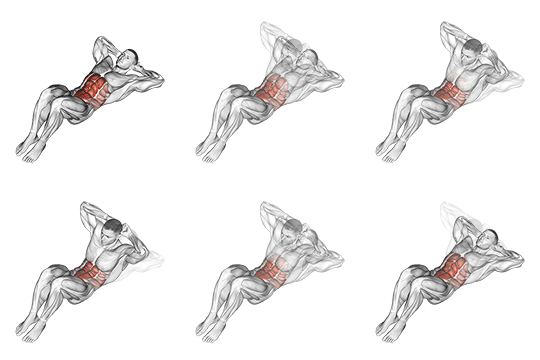
How to Do a Crunch
Starting setup: lie flat on your back on an exercise mat. Bend your knees at 90 degrees with your feet flat on the floor hip-width apart.
Hand placement: place your fingertips lightly behind your head or cross your arms over your chest. Do not pull on your neck.
Flatten lower back: press your lower back firmly down into the floor to engage your deep core.
Curl upper torso: exhale as you flex your abs, curling your head, neck, and shoulder blades up off the floor toward your knees.
Peak abdominal squeeze: squeeze your abs hard at peak contraction for 1 second. Your lower back must stay touching the floor.
Lower under control: inhale as you slowly lower your upper back down to the mat over 2 seconds before starting the next rep.
Form Check & Technique
DO THIS (Technique Tips)
- Press lower back flat into mat.
- Fingertips light behind head.
- Exhale hard at top contraction.
- Lift only shoulder blades off floor.
- Lower under 2-second negative control.
AVOID THIS (Common Mistakes)
- Yanking Neck Forward — Fix: keep fingertips light behind head and chin spaced away from chest.
- Lifting Lower Back Off Floor — Fix: press lower back flat into mat throughout.
- Using Momentum — Fix: perform slow, controlled curls with 1-second top squeeze.
- Holding Breath — Fix: exhale fully as you crunch up, inhale as you lower down.
About Crunch
The crunch is a classic abdominal isolation exercise designed to flex the upper spine and target the rectus abdominis ('six-pack' muscle). Unlike sit-ups, which involve full trunk flexion and hip flexors, the crunch isolates the upper abs by lifting only the head, neck, and shoulder blades off the floor while keeping the lower back pressed flat against the mat.
Crunch Muscles Worked
The crunch uses spinal flexion to shorten the rectus abdominis from top to bottom.
- Keeping the lower back glued to the floor eliminates hip flexor involvement, isolating the abdominal wall.
Sets & Reps Guidance
Muscle Growth (Hypertrophy)
Hypertrophy: 3–4 sets of 15–20 reps with 1-second top squeeze.
General training baseline. Need.fit automatically adjusts exact sets, reps, and working weight based on your individual fitness level, recovery, and progress over time.
Exercise Variations & Alternatives
Cable Crunch
Kneeling cable crunch providing constant loaded tension.
Bicycle Crunch
Rotational crunch targeting obliques and abs.
Sit-Up
Full trunk flexion abdominal exercise.
Plank
Anti-extension core hold.
Lying Leg Raise
Lower abdominal exercise.
Hanging Leg Raise
Learn hanging leg raise form, muscles worked, grip and pelvic-control cues, common mistakes, beginner progressions, lying-raise differences, and sets and reps.
Crunch vs Sit-Up
Crunches only lift the shoulder blades off the floor, isolating the rectus abdominis without hip flexors. Sit-ups lift the entire torso off the floor, engaging hip flexors (iliopsoas) and placing higher torque on the lower back.
Protecting Your Neck During Crunches
Never pull on your head or yank your neck forward with your hands. Imagine holding an apple under your chin and focus on curling your ribs down toward your hips using your abs.
Adding Weight to Crunches
Hold a light weight plate or dumbbell across your chest to progressively overload your abdominal muscles for greater six-pack muscle growth.
Crunch Benefits
Isolates upper abdominal muscles, safe and easy to perform anywhere, low lower-back strain compared to sit-ups, and highly effective for high-rep core finishers.