
Tricep Dip
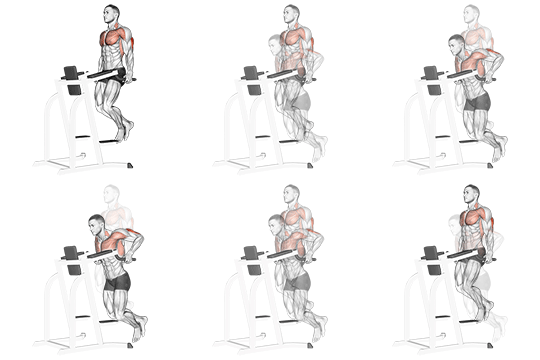
How to Do Tricep Dips With Proper Form
Set the Bars and Grip: Use stable parallel bars or a dip station. If the bars are adjustable, use a comfortable width around shoulder width rather than an excessively wide setup, then take an even closed grip.
Establish the Top Support: Press yourself up so your body is supported between the bars. Start with the arms extended, shoulders controlled away from the ears, torso relatively upright, and trunk braced.
Keep the Triceps-Focused Position: Stay tall instead of deliberately leaning far forward. Let the legs hang naturally or position them so they do not create swinging momentum.
Lower Under Control: Bend the elbows and lower your body slowly. Let the elbows track mostly backward while keeping the shoulders stable instead of allowing the upper body to collapse between the bars.
Use a Comfortable Depth: Descend until you reach the deepest position you can control comfortably. Upper arms near parallel with the floor or elbows around shoulder height can be useful visual checkpoints, but individual shoulder mobility and control should determine the final range.
Press Through the Bars: Drive your palms into the bars and extend the elbows to raise your body. Keep the torso angle consistent and avoid kicking the legs or bouncing out of the bottom.
Finish With Control: Return to a stable top position with the arms near full extension without aggressively snapping the elbows into lockout. Reset your shoulder position before the next repetition.
Form Check & Technique
DO THIS (Technique Tips)
- Start every set from a stable top support.
- Use a comfortable bar width around shoulder width when possible.
- Stay relatively upright for triceps emphasis.
- Keep your eyes and head position neutral and repeatable.
- Let the elbows track mostly backward.
- Lower slowly instead of dropping into the bottom.
- Use the deepest shoulder range you can control comfortably.
- Brace the core so the legs do not swing.
- Press smoothly through the bars.
- Build clean bodyweight repetitions before progressing to weighted dips.
AVOID THIS (Common Mistakes)
- Leaning Too Far Forward — Fix: Keep the torso relatively upright when triceps emphasis is the goal.
- Using Bars That Feel Excessively Wide — Fix: Choose a stable, comfortable width that lets the shoulders and elbows move smoothly.
- Dropping Into the Bottom — Fix: Lower deliberately instead of falling quickly into shoulder extension.
- Forcing Excessive Depth — Fix: Stop at the deepest range you can control comfortably rather than chasing maximum depth.
- Shrugging the Shoulders — Fix: Maintain a stable shoulder position instead of collapsing upward toward the ears.
- Elbows Flaring Uncontrollably — Fix: Let the elbows track mostly backward and keep the arm path consistent.
- Swinging or Kicking the Legs — Fix: Brace the trunk and keep the lower body quiet.
- Bouncing Out of the Bottom — Fix: Reverse direction under muscular control rather than using momentum.
- Snapping the Elbows Into Lockout — Fix: Finish strongly but smoothly at the top.
- Adding Weight Too Early — Fix: Build repeatable bodyweight technique before introducing significant external resistance.
About Tricep Dip
The tricep dip is a compound bodyweight strength exercise performed on parallel bars or a dip station. It primarily trains the triceps brachii while the chest and front shoulders assist. For a triceps-focused dip, begin in a stable support position, keep the torso relatively upright, let the elbows track backward, lower under control through a comfortable shoulder range, and press through the bars until you return to a stable top position. A greater forward torso lean shifts more emphasis toward the chest, which is why Need.fit treats the tricep dip and chest dip as related but distinct exercise pages.
Tricep Dip Muscles Worked
The triceps brachii is the primary target of the tricep dip because it extends the elbow as you press your body upward.
- The pectoralis major and anterior deltoids assist the compound press, while muscles around the shoulder girdle, forearms, and trunk help stabilize the body between the bars.
- The exercise is therefore triceps-focused rather than triceps-isolated.
Sets & Reps Guidance
Technique / Learning
Learning / First Dip: 2–4 sets of 4–8 assisted reps, controlled negatives, or short support-hold practice depending on your current strength.
Strength Focus
Strength: 3–5 sets of 3–6 controlled weighted reps once bodyweight dips are technically consistent and external load can be added without changing torso or shoulder control.
Muscle Growth (Hypertrophy)
Muscle Growth: 3–4 sets of 6–12 controlled reps using bodyweight, assistance, or added resistance that keeps the target muscles working through consistent repetitions.
General training baseline. Need.fit automatically adjusts exact sets, reps, and working weight based on your individual fitness level, recovery, and progress over time.
Exercise Variations & Alternatives
Tricep Pushdown
A cable-based elbow-extension exercise that trains the triceps without requiring full-body support between dip bars.
Close-Grip Bench Press
A compound barbell press that heavily involves the triceps and allows precise external-load progression.
Overhead Tricep Extension
An elbow-extension exercise performed with the arm overhead to train the triceps through a different shoulder position.
Skull Crusher
A free-weight triceps exercise that focuses on elbow extension without the bodyweight support demands of a dip.
Chest Dip
A related parallel-bar dip variation that uses greater forward torso lean to place more emphasis on the chest.
Rope Pushdown
Learn proper rope pushdown form, muscles worked, cable setup, elbow position, common mistakes, rope vs bar differences, variations, sets and reps.
Tricep Dip vs Chest Dip: What Changes?
Both exercises use the same general parallel-bar dip pattern, but the training emphasis changes with body position.
- A triceps-focused dip keeps the torso relatively upright and emphasizes elbow extension.
- A chest-focused dip uses more forward torso lean and typically allows the chest to contribute more strongly.
- Neither version completely removes the other muscle group, so describe the difference as a shift in emphasis rather than total isolation.
How Deep Should You Go on Tricep Dips?
Lower only as far as you can maintain shoulder control, a consistent elbow path, and a smooth reversal into the press.
- Upper arms around parallel with the floor or elbows around shoulder height are useful visual references used in many exercise guides, but they are not mandatory anatomical rules.
- More depth is not automatically better if the bottom position becomes unstable or uncomfortable.
Should You Lock Out at the Top of a Tricep Dip?
Finish each repetition in a stable top support with the elbows extended or near full extension, but avoid aggressively snapping the joint into lockout. The goal is a repeatable finish position where the shoulders remain controlled and the body is stable before the next repetition.
How to Progress to Your First Tricep Dip
If a full bodyweight repetition is not yet available, build the movement in stages.
- Practice stable top-support holds, controlled eccentric lowers, and assisted dips using a machine or band.
- Gradually reduce assistance as strength improves.
- Push-up and close-grip pressing variations can also build useful pressing strength while you work toward an independent dip.
Assisted, Bodyweight and Weighted Tricep Dips
Use assisted dips when full bodyweight is too difficult to control.
- Progress to standard bodyweight dips when you can perform repeatable full repetitions without swinging or losing shoulder position.
- Once bodyweight sets are consistently strong, external resistance from a dip belt or another appropriate loading method can provide progressive overload without relying only on higher repetitions.
Tricep Dip Alternatives if You Do Not Have Dip Bars
Good alternatives depend on your available equipment.
- Close-grip push-ups provide a bodyweight pressing option, while tricep pushdowns, close-grip bench presses, overhead tricep extensions, and skull crushers let you train elbow extension without a dip station.
- These alternatives do not reproduce the exact mechanics of a parallel-bar dip, but they can train the same primary muscle group.
Tricep Dip vs Bench Dip
A parallel-bar tricep dip supports the body between two bars and allows the shoulder and torso to move differently from a bench dip.
- A bench dip fixes the hands behind the torso and creates a different shoulder-extension position.
- Treat bench dips as a separate variation rather than assuming they are mechanically identical to parallel-bar dips.
Benefits of Tricep Dips
Tricep dips train elbow-extension strength while also challenging chest, shoulder, grip, shoulder-girdle, and trunk stability. Because the movement begins with bodyweight and can later be assisted or externally loaded, it can fit a progression from learning the pattern to higher-level strength work.
Sources & References
- [1]
- [2]Bench, Bar, and Ring Dips: Do Kinematics and Muscle Activity Differ? — PubMed Central (PMC9603242)View Source
- [3]Fatigue Increases Muscle Activations but Does Not Change Maximal Joint Angles During the Bar Dip — PubMed Central (PMC9659300)View Source
- [4]