
Rope Pushdown
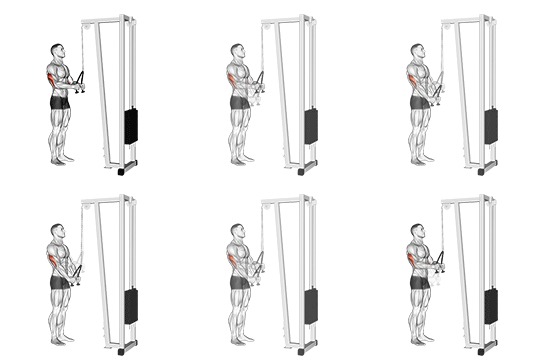
How to Do a Rope Pushdown
Set the cable high: attach a rope to the highest practical pulley position and select a load you can control without using body momentum.
Take a neutral grip: grasp the rope ends with palms facing each other, stand tall with feet stable, soften the knees, and use only a small forward hinge if it helps you clear the cable.
Set the upper arms: bring the elbows close to the sides of the torso and keep the shoulders quiet. The elbows should remain controlled rather than drifting far forward during each repetition.
Extend the elbows: press the rope downward by straightening the arms and contracting the triceps. Think about moving the forearms while the upper arms stay relatively stable.
Finish under control: near the bottom, allow the rope ends to separate naturally toward the sides of the thighs if comfortable. Do not force an exaggerated outward pull that changes the movement into a shoulder action.
Use a smooth lockout: reach full or near-full elbow extension without snapping the joint aggressively. Choose the finish position that keeps tension on the triceps and feels comfortable.
Control the return: let the elbows bend slowly until the forearms return toward the starting position, keeping cable tension and avoiding a sudden upward pull from the weight stack.
Form Check & Technique
DO THIS (Technique Tips)
- High pulley, stable stance.
- Use a neutral grip on the rope.
- Keep the shoulders quiet.
- Move mainly at the elbows.
- Press down without body momentum.
- Let the rope separate naturally near the thighs.
- Control the return.
- Use a load that keeps the elbow path repeatable.
AVOID THIS (Common Mistakes)
- Elbows Drifting Far Forward — Fix: keep the upper arms controlled near the torso so elbow extension remains the main movement.
- Using the Torso to Push the Weight — Fix: reduce the load and keep the trunk stable instead of leaning harder into every repetition.
- Rope Flying Up on the Return — Fix: control elbow flexion and keep tension on the cable during the eccentric phase.
- Forcing the Rope Too Far Apart — Fix: separate the ends naturally rather than turning the finish into shoulder abduction.
- Shoulders Rolling Forward at the Bottom — Fix: keep the shoulder girdle stable while the forearms move.
- Using Too Much Weight — Fix: choose a load that allows the same elbow path and tempo from the first rep to the last.
- Shortening Every Rep — Fix: use a repeatable range that includes meaningful elbow flexion and extension without losing control.
About Rope Pushdown
The rope pushdown, also called a rope tricep extension or cable rope pushdown, is a single-joint cable exercise that trains the triceps brachii through elbow extension. Attach a rope to a high pulley, use a neutral grip, keep the upper arms controlled near the torso, extend the elbows to drive the rope down, and return the cable slowly. The rope attachment lets the hands separate naturally near the bottom, but the main training action is still elbow extension rather than shoulder movement.
Rope Pushdown Muscles Worked
The rope pushdown primarily trains the triceps brachii because the triceps extend the elbow against cable resistance.
- The anconeus assists elbow extension, while forearm and grip muscles stabilize the rope.
- The shoulders and trunk mainly provide position and stability when the exercise is performed without excessive body movement.
Sets & Reps Guidance
Technique / Learning
Technique: 2–3 sets of 10–15 reps with a lighter load while learning cable setup, elbow position, and rope control.
Strength Focus
Heavy accessory work: 3–4 sets of 6–10 controlled reps when elbow position stays stable and the torso does not contribute momentum.
Muscle Growth (Hypertrophy)
Muscle growth: 2–4 sets of 8–15 reps using a load that allows full, controlled elbow extension and a slow return.
General training baseline. Need.fit automatically adjusts exact sets, reps, and working weight based on your individual fitness level, recovery, and progress over time.
Exercise Variations & Alternatives
Tricep Pushdown
A cable elbow-extension exercise performed with another handle such as a straight or angled bar.
Overhead Tricep Extension
Trains elbow extension with the shoulder in an overhead position, changing the length and loading demands on the triceps.
Skull Crusher
A free-weight elbow-extension variation performed lying or on a bench.
Tricep Dip
A compound bodyweight press that heavily involves the triceps along with the chest and front shoulders.
Close-Grip Bench Press
Learn close-grip bench press form, muscles worked, grip width, elbow and bar-path cues, common mistakes, standard-bench differences, variations, sets and reps.
Barbell Bench Press
Learn proper barbell bench press form, muscles worked, grip and bar-path cues, common mistakes, and practical sets and reps for strength or muscle.
Rope Pushdown vs Tricep Pushdown
Rope pushdown is a tricep pushdown performed with a rope attachment.
- A straight bar, V-bar, angled handle, or rope can all train elbow extension.
- The rope mainly changes hand freedom and wrist position; the target remains the triceps.
Should You Spread the Rope at the Bottom?
Letting the rope ends separate near the thighs can create a comfortable finish position and is common on rope pushdowns. Treat the separation as a natural consequence of the flexible attachment, not as a requirement to force the hands as far apart as possible.
Should Your Elbows Stay Completely Fixed?
Keep the upper arms controlled so the movement remains primarily elbow extension.
- Small individual movement can occur, and some lifters prefer a slight change in elbow position during the return.
- Avoid large shoulder swings that turn the repetition into a full-body cable press.
Should You Lock Out on Rope Pushdowns?
You can finish at full or near-full elbow extension if it is comfortable and controlled.
- Do not snap aggressively into lockout.
- If stopping just short of lockout helps you maintain tension or feels better at the elbow, that is also a practical option.
Rope Pushdown Benefits
The rope pushdown is easy to learn, keeps resistance on the triceps through a cable, and can be loaded in small increments. It works well after compound pressing exercises or as direct triceps work in upper-body, push, arm, and full-body sessions.
Rope Pushdown Alternatives
If a rope or cable stack is unavailable, use another elbow-extension exercise such as a tricep pushdown with a different handle, overhead tricep extension, skull crusher, close-grip bench press, or bodyweight tricep dip. These exercises share the triceps target but differ in mechanics and loading.
Sources & References
- [1]
- [2]Muscle Fatigue in the Three Heads of Triceps Brachii During Intensity and Speed Variations of Triceps Push-Down Exercise — PubMed (PMID: 32153422)View Source
- [3]Differences in Muscle Activity During Cable Resistance Training Are Influenced by Variations in Handle Types — PubMed (PMID: 26694502)View Source