
Close-Grip Bench Press
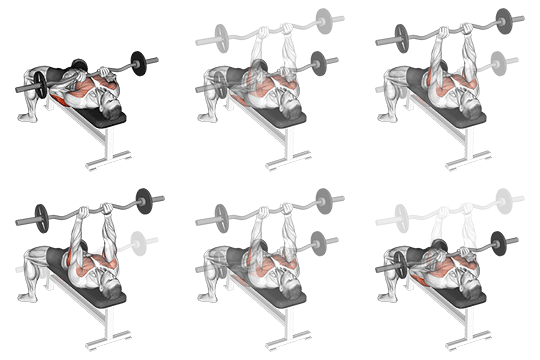
How to Do a Close-Grip Bench Press
Set up on the bench: lie with your eyes around or slightly behind the bar, plant the feet, and position the upper back firmly against the bench.
Choose a close but comfortable grip: start around shoulder width or slightly outside it. Avoid forcing the hands extremely close together if that bends the wrists or prevents a controlled chest touch.
Create upper-back tension: retract and stabilize the shoulder blades, keep the wrists stacked over the forearms, and brace before unracking.
Unrack over the torso: bring the bar into a stable start position with the elbows extended and the upper back still tight.
Lower under control: bend the elbows and guide the bar toward the mid-to-lower chest or sternum area, keeping the elbows closer to the torso than in many wide-grip bench styles without forcing them against the ribs.
Press from a stable base: drive through the feet and bench while extending the elbows and returning the bar toward the start position.
Finish smoothly: reach a controlled top position without losing shoulder position or aggressively snapping the elbows, then repeat.
Form Check & Technique
DO THIS (Technique Tips)
- Start around shoulder-width grip.
- Keep wrists stacked.
- Maintain upper-back tension.
- Use a controlled elbow path.
- Touch the chest without bouncing.
- Drive through the feet and bench.
- Press with the triceps and chest together.
- Increase load only when the same bar path stays repeatable.
AVOID THIS (Common Mistakes)
- Grip Too Narrow — Fix: widen to a position that keeps the wrists comfortable and allows a controlled chest touch.
- Wrists Bent Far Back — Fix: stack the bar more directly over the forearms.
- Elbows Flaring Uncontrollably — Fix: use a repeatable elbow path closer to the torso.
- Elbows Forced Against the Ribs — Fix: allow a natural controlled angle instead of over-tucking.
- Bouncing the Bar Off the Chest — Fix: touch under control before pressing.
- Losing Upper-Back Position — Fix: keep the shoulder blades stable through the set.
- Hips Lifting Off the Bench — Fix: use controlled leg drive while keeping the glutes in contact.
- Using Standard Bench Weight Immediately — Fix: start lighter because a narrower grip often reduces the load you can handle.
About Close-Grip Bench Press
The close-grip bench press is a compound barbell press performed with a narrower hand position than a standard bench press. It trains the triceps brachii heavily while the pectoralis major and anterior deltoids assist the press. A useful starting grip is around shoulder width or slightly outside it, but exact spacing should match your frame, wrist comfort, and ability to lower the bar under control. Keep the upper back stable, lower the bar toward the mid-to-lower chest with a repeatable elbow path, then press by extending the elbows while maintaining whole-body tension.
Close-Grip Bench Press Muscles Worked
The close-grip bench press is a compound press, not a triceps isolation exercise.
- Narrower bench-press grips generally increase elbow-extension demands and can increase triceps activity compared with wider grips, while the chest and anterior deltoids still contribute substantially.
- Grip width also changes the load you can use and the joint moments at the shoulder and elbow.
Sets & Reps Guidance
Technique / Learning
Technique: 2–4 sets of 5–8 lighter reps while establishing grip width, wrist stacking, upper-back tension, and bar path.
Strength Focus
Strength: 3–5 sets of 3–6 reps using a load that preserves stable wrists, upper-back tension, and a repeatable touch point.
Muscle Growth (Hypertrophy)
Muscle growth: 3–4 sets of 6–10 reps when the triceps remain a major limiter and the chest touch and elbow path stay consistent.
General training baseline. Need.fit automatically adjusts exact sets, reps, and working weight based on your individual fitness level, recovery, and progress over time.
Exercise Variations & Alternatives
Tricep Dip
A compound bodyweight press that emphasizes elbow extension with chest and shoulder assistance.
Tricep Pushdown
A cable isolation exercise that trains elbow extension with less chest involvement.
Overhead Tricep Extension
An elbow-extension exercise performed with the upper arm overhead.
Skull Crusher
A lying elbow-extension exercise that directly trains the triceps.
Barbell Bench Press
A standard wide-grip compound pressing exercise for overall chest and pressing strength.
Push-Up
A bodyweight compound pressing exercise targeting the triceps and chest.
How Close Should Your Grip Be?
A close grip should be narrower than your normal bench grip without forcing the wrists into an uncomfortable angle.
- Around shoulder width or slightly outside shoulder width works well for many lifters.
- Extremely narrow hand spacing is not required to train the triceps.
Close-Grip Bench Press vs Standard Bench Press
Both exercises train the chest, triceps, and front shoulders. Narrower grips shift more of the pressing demand toward elbow extension and generally increase triceps contribution relative to wider grips, while wider grips can increase chest emphasis and often allow heavier loads.
How Much Should Your Elbows Tuck?
Keep the elbows on a controlled path that lets the forearms remain well aligned under the bar.
- You do not need to pin the elbows hard against your ribs.
- Excessive flare or excessive tucking can both make the movement less comfortable depending on your anatomy.
Where Should the Bar Touch?
A mid-to-lower chest or lower-sternum touch point is a common result of a close grip and tucked elbow path.
- The exact point varies with arm length, grip width, arch, and bar path.
- Keep the forearms and wrists stacked rather than chasing one universal touch spot.
How Should Your Wrists Be Positioned?
Keep the bar low enough in the palm that the wrist stays relatively stacked over the forearm. If an ultra-close grip forces the wrists to bend sharply, widen the hands slightly.
Close-Grip Bench Press vs Tricep Dip
Both are compound triceps-focused presses. The close-grip bench press uses a barbell and allows small loading increments, while tricep dips use bodyweight or added weight and involve a different shoulder-extension range.
Close-Grip Bench Press vs Tricep Pushdown
The close-grip bench press is a multi-joint exercise involving the chest and shoulders in addition to the triceps.
- The pushdown isolates elbow extension more directly and usually creates less whole-body fatigue.
- They can be combined rather than treated as substitutes.
Close-Grip Bench Press Benefits
The exercise lets you load the triceps with heavier absolute resistance than most isolation exercises while also developing pressing strength. It works well in strength, upper-body, push, chest, and arm sessions.
Sources & References
- [1]
- [2]
- [3]
- [4]The Effect of Grip Width on Muscle Strength and Electromyographic Activity in Bench Press Among Novice- and Resistance-Trained Men — PubMed (PMID: 34198674)View Source
- [5]The Influence of Grip Width and Forearm Pronation/Supination on Upper-Body Myoelectric Activity During the Flat Bench Press — PubMed (PMID: 16095407)View Source
- [6]Understanding Bench Press Biomechanics—The Necessity of Measuring Lateral Barbell Forces — PubMed (PMID: 33555823)View Source