
Hip Thrust
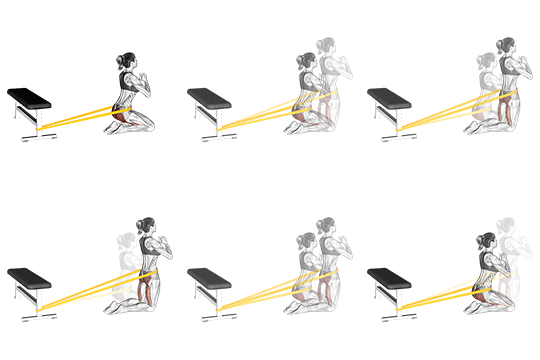
How to Do a Hip Thrust
Set up the bench: sit on the floor with your upper back against a stable bench or hip-thrust station. Position the lower shoulder-blade area near the edge so the upper back can pivot comfortably.
Choose your resistance: begin with bodyweight if you are learning the movement. Add a dumbbell, resistance band, barbell, or machine resistance only when the bodyweight version is controlled.
Place your feet: start around hip to shoulder width with both feet flat on the floor. Adjust the distance so you can reach a strong top position without the heels lifting or the knees feeling crowded.
Brace your trunk: keep the rib cage and pelvis controlled and use a slight chin tuck so the movement comes from the hips instead of excessive spinal extension.
Drive the hips upward: press through the whole foot and contract the glutes to extend the hips. Keep the knees tracking in a stable direction with the feet.
Finish at controlled hip extension: stop when the hips are fully extended and the torso is roughly in line with the thighs. Do not keep pushing upward by arching the lower back.
Lower under control: let the hips descend smoothly while keeping the same foot position and trunk control, then repeat.
Form Check & Technique
DO THIS (Technique Tips)
- Use a stable bench.
- Learn the movement with bodyweight first.
- Keep both feet fully planted.
- Adjust foot distance to your anatomy.
- Brace the trunk before driving upward.
- Squeeze the glutes to extend the hips.
- Finish at neutral hip extension, not lower-back hyperextension.
- Lower slowly and repeat from the same setup.
- Add dumbbell, band, barbell, or machine resistance only when form is consistent.
AVOID THIS (Common Mistakes)
- Bench Moving During the Set — Fix: use a stable bench or hip-thrust station before beginning.
- Feet Too Close or Too Far Away — Fix: adjust foot distance until the feet stay planted and full hip extension feels controlled.
- Lower-Back Hyperextension at the Top — Fix: stop when the hips reach full extension instead of arching higher through the spine.
- Knees Collapsing Inward — Fix: keep the knees tracking in a stable direction with the feet.
- Pushing Only Through the Toes — Fix: keep the whole foot planted throughout the repetition.
- Head Throwing Back — Fix: keep a comfortable slight chin tuck and stable head position.
- Using Too Much Resistance — Fix: reduce the load if you cannot reach the same top position and controlled eccentric.
- Bouncing Out of the Bottom — Fix: reverse direction under muscular control.
About Hip Thrust
The hip thrust is a hip-extension exercise performed with the upper back supported on a bench while the hips move from a lowered position to full extension. It primarily trains the gluteus maximus, while the hamstrings, adductors, quadriceps, lateral glutes, and core assist with movement and stability. Hip thrusts can be performed with bodyweight or progressed with a dumbbell, resistance band, barbell, or machine. Proper hip thrust form keeps the bench secure, the feet planted, the ribs and pelvis controlled, and the top position focused on glute-driven hip extension rather than lower-back hyperextension.
Hip Thrust Muscles Worked
The gluteus maximus is the main target of the hip thrust because it produces powerful hip extension as the pelvis rises.
- The hamstrings and adductor magnus assist hip extension, the quadriceps help stabilize the knee position, and the lateral glutes and trunk muscles help control the pelvis.
- The exact contribution of each muscle changes with foot position, resistance, range of motion, and individual anatomy.
Sets & Reps Guidance
Technique / Learning
Technique: 2–3 sets of 10–15 bodyweight reps while learning bench position, foot placement, trunk control, and glute-driven lockout.
Strength Focus
Strength: 3–5 sets of 5–8 reps using external resistance once you can maintain stable feet, controlled pelvic position, and full hip extension.
Muscle Growth (Hypertrophy)
Muscle growth: 3–4 sets of 8–15 reps using bodyweight or added resistance that keeps the glutes working through consistent repetitions.
General training baseline. Need.fit automatically adjusts exact sets, reps, and working weight based on your individual fitness level, recovery, and progress over time.
Exercise Variations & Alternatives
Glute Bridge
A floor-based hip-extension exercise with a simpler setup and shorter range of motion.
Romanian Deadlift
A standing hip-hinge exercise that trains the glutes and hamstrings through a longer hip-flexion range.
Barbell Back Squat
A compound squat that trains the glutes alongside the quadriceps and adductors.
Bulgarian Split Squat
A unilateral lower-body exercise that trains the glutes and quadriceps with additional balance demands.
Lying Leg Curl
A knee-flexion exercise that directly trains the hamstrings and complements hip-extension work.
Barbell Bench Press
Learn proper barbell bench press form, muscles worked, grip and bar-path cues, common mistakes, and practical sets and reps for strength or muscle.
Bodyweight Hip Thrust vs Weighted Hip Thrust
A bodyweight hip thrust is the best place to learn bench position, foot placement, pelvic control, and full hip extension.
- Once repetitions become easy, resistance can be added with a dumbbell, band, barbell, or machine.
- The movement pattern remains the same; only the loading method changes.
Where Should Your Feet Be During Hip Thrusts?
Start with the feet around hip to shoulder width and adjust the distance based on comfort and control.
- Feet that are too close can make the movement feel more knee-dominant, while feet that are too far away can increase hamstring involvement and make full hip extension harder.
- There is no single universal foot position for everyone.
Do Your Shins Need to Be Perfectly Vertical?
Vertical shins at the top can be a useful visual checkpoint, but they are not a mandatory rule.
- Limb proportions, bench height, foot angle, and training intent affect the exact knee position.
- Prioritize planted feet, stable knees, and a strong glute contraction without discomfort.
Should You Tuck Your Chin During Hip Thrusts?
A slight chin tuck can help keep the rib cage and pelvis controlled and discourage excessive lower-back extension.
- You do not need to force the chin hard into the chest.
- Keep the head and neck in a comfortable, repeatable position while the hips do the work.
Hip Thrust vs Glute Bridge
Both exercises train hip extension.
- A glute bridge keeps the upper back on the floor and usually uses a shorter range of motion with simpler loading.
- A hip thrust elevates the upper back on a bench, creates a larger usable hip range, and is generally easier to progress with heavier resistance.
Hip Thrust vs Squat for Glutes
Hip thrusts and squats both train the glutes but challenge the lower body differently.
- Hip thrusts emphasize horizontal hip extension and are easy to load directly for glute work.
- Squats train the glutes alongside the quadriceps and adductors through a squat pattern.
- They can complement each other rather than replacing one another.
Hip Thrust Variations and Loading Options
Common options include bodyweight hip thrusts, dumbbell hip thrusts, resistance-band hip thrusts, barbell hip thrusts, single-leg hip thrusts, and machine hip thrusts. Choose the version that matches your current strength, equipment, and ability to keep the same movement quality.
Hip Thrust Benefits
Hip thrusts provide a highly scalable hip-extension exercise for the glutes, require less balance than many standing lower-body lifts, and can be used in beginner, strength, hypertrophy, athletic, and general fitness programs. They also pair well with squats, lunges, deadlift variations, and hamstring exercises.
Sources & References
- [1]
- [2]