
Glute Bridge
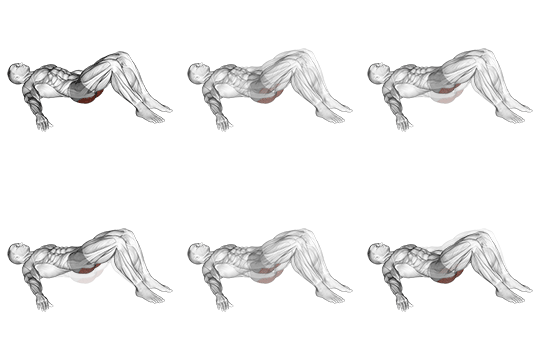
How to Do a Glute Bridge
Starting setup: lie flat on your back on a mat with your knees bent at ~90 degrees and feet flat on the floor, hip-width apart.
Arm and torso position: lay your arms flat at your sides with palms down, flatten your lower back against the floor, and brace your core.
Drive hips up: exhale as you press firmly through your heels, lifting your hips off the floor until your knees, hips, and shoulders form a straight diagonal line.
Peak glute squeeze: squeeze your glutes as hard as possible at top extension for 2 seconds without arching your lower back.
Lower under control: inhale as you slowly lower your hips back down until they lightly touch the mat before starting the next rep.
Form Check & Technique
DO THIS (Technique Tips)
- Keep feet hip-width apart and flat.
- Drive through heels.
- Squeeze glutes hard at top for 2 seconds.
- Keep lower ribs pulled down.
- Use resistance band around knees for extra glute medius activation.
AVOID THIS (Common Mistakes)
- Arching Lower Back at Top — Fix: keep core tight and stop lifting when hips line up with knees and shoulders.
- Pushing Off Toes — Fix: keep heels glued to floor and drive weight through heels.
- Rushing Reps — Fix: hold a strict 2-second hard glute squeeze at the top of every rep.
- Knees Collapsing Inward — Fix: push knees outward inline with middle toes.
About Glute Bridge
The glute bridge is a fundamental bodyweight or loaded hip-extension exercise performed while lying flat on your back on the floor. It isolates the gluteus maximus while teaching proper hip-extension mechanics and pelvic bracing without placing stress on the spine. It serves as an essential warmup, glute activation drill, and baseline strength exercise for beginners and advanced athletes alike.
Glute Bridge Muscles Worked
The glute bridge isolates the gluteus maximus in terminal hip extension.
- Bent knees minimize hamstring leverage compared to straight-leg bridges, keeping the primary focus on contracting the glutes.
Sets & Reps Guidance
Strength Focus
Weighted Glute Bridge: 3–4 sets of 8–12 reps with dumbbell across hips.
Muscle Growth (Hypertrophy)
Hypertrophy / Activation: 3 sets of 12–15 reps with 2-second pause at top.
General training baseline. Need.fit automatically adjusts exact sets, reps, and working weight based on your individual fitness level, recovery, and progress over time.
Exercise Variations & Alternatives
Hip Thrust
Elevated bench hip extension for heavy glute strength.
Romanian Deadlift
Standing hip hinge for glute and hamstring stretch.
Lying Leg Curl
Hamstring isolation exercise.
Standing Calf Raise
Calf muscle isolation movement.
Plank
Core stability exercise.
Barbell Bench Press
Learn proper barbell bench press form, muscles worked, grip and bar-path cues, common mistakes, and practical sets and reps for strength or muscle.
Glute Bridge vs Hip Thrust
The glute bridge is performed flat on the floor, which limits the bottom range of motion but requires zero equipment. The hip thrust uses an upper back bench elevation for twice the range of motion and heavier loading capability.
Single-Leg Glute Bridge Progression
Once bodyweight glute bridges become easy, lift one leg straight in the air and bridge off the single remaining foot. Single-leg glute bridges build unilateral glute strength and fix leg strength imbalances.
Adding Resistance (Bands & Dumbbells)
Place a mini loop band around your knees (just above joint) to activate the gluteus medius during the bridge, or hold a dumbbell/plate across your hips for extra strength progression.
Glute Bridge Benefits
Improves glute activation, reduces lower back pain caused by glute amnesia, strengthens pelvic stability, requires no gym equipment, and serves as a warm-up before heavy squats.