
Chin-Up
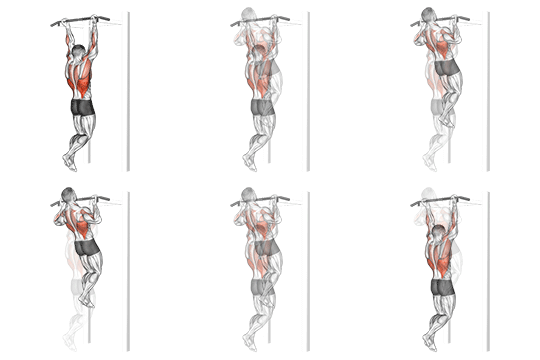
How to Do a Chin-Up
Take an Underhand Grip: Use a supinated grip (palms facing toward you) set around shoulder width on a chin-up bar.
Establish a Controlled Hang: Straighten your arms completely while keeping your shoulders and body in an active, controlled position.
Brace the Torso: Control your ribs, pelvis, and legs to prevent body swinging or using lower-body momentum.
Begin the Pull: Drive your elbows down and back while pulling your chest upward toward the bar.
Reach the Top: Bring your chin cleanly above the bar without craning or reaching forward with your neck.
Lower Smoothly: Extend your elbows under control during the eccentric phase back to full arm extension.
Reset: Return to a stable starting position at the bottom before initiating the next rep.
Form Check & Technique
DO THIS (Technique Tips)
- Shoulder-width supinated grip.
- Full active arm extension at bottom.
- Brace core and squeeze glutes.
- Drive elbows down and back.
- Chest up to the bar.
- Clean chin-over-bar finish.
- Control 2-second eccentric descent.
- Maintain consistent neck position.
AVOID THIS (Common Mistakes)
- Grip too narrow — Fix: Keep hands at shoulder width to avoid wrist and elbow strain.
- Kipping or swinging legs — Fix: Keep legs straight or slightly crossed and brace your core.
- Half reps at the bottom — Fix: Extend arms fully between reps without unhinging shoulder stability.
- Craning the neck — Fix: Pull chest up toward the bar rather than reaching with your chin.
- Rushing the descent — Fix: Lower your body over 2–3 seconds under full muscular control.
- Elbows flaring excessively — Fix: Drive elbows down and slightly back in line with your shoulders.
- Losing trunk tension — Fix: Keep ribs pulled down and glutes squeezed throughout the rep.
- Adding weight too soon — Fix: Build a strong foundation of strict bodyweight reps before adding load.
About Chin-Up
The chin-up is a foundational bodyweight vertical pulling exercise performed with a supinated underhand grip. It targets the latissimus dorsi, upper back, and biceps brachii while demanding strong core stabilization. A strict chin-up starts from a controlled overhead dead hang, drives the elbows downward to bring the chin cleanly over the bar, and lowers smoothly back to full arm extension.
Muscles Worked by the Chin-Up
The chin-up is a compound vertical pull that heavily engages both the upper back and upper arm flexors.
- The supinated forearm position places the biceps brachii in strong mechanical alignment for elbow flexion, while the latissimus dorsi acts as the primary driver of shoulder extension.
- Trapezius and rhomboids control scapular retraction and depression, and the core and trunk stabilizers maintain vertical body alignment throughout the entire movement.
Sets & Reps Guidance
Technique / Learning
Technique: 2–4 sets of controlled reps while leaving enough reserve to maintain strict technique.
Strength Focus
Strength: 3–5 sets of roughly 3–6 reps (weighted or bodyweight) with full control.
Muscle Growth (Hypertrophy)
Volume / Hypertrophy: 3–4 sets of 6–10 reps focusing on controlled eccentrics.
General training baseline. Need.fit automatically adjusts exact sets, reps, and working weight based on your individual fitness level, recovery, and progress over time.
Exercise Variations & Alternatives
Pull-Up
Overhand bodyweight pull emphasizing shoulder adduction.
Lat Pulldown
Adjustable cable vertical pull.
Deadlift
Learn proper deadlift form, muscles worked, setup, bracing and bar-path cues, common mistakes, variations, and practical sets and reps.
Barbell Bent-Over Row
Learn barbell bent-over row form, muscles worked, torso-angle and bar-path cues, common mistakes, grip options, and practical sets and reps.
Single-Arm Dumbbell Row
Learn single-arm dumbbell row form, muscles worked, bench setup, dumbbell and elbow path, torso-rotation cues, mistakes, and practical sets and reps.
Seated Cable Row
Learn seated cable row form, muscles worked, handle and grip options, scapular-motion and torso cues, common mistakes, and practical sets and reps.
What Muscles Do Chin-Ups Work?
Chin-ups engage both the upper back and arm flexors heavily.
- The latissimus dorsi drives shoulder extension while the biceps brachii, brachialis, and brachioradialis flex the elbow joints under load.
- Upper back stabilizers including the trapezius and rhomboids, as well as forearm flexors and core abdominal muscles, support shoulder joint position, torso stability, and grip strength throughout every repetition.
How Wide Should Your Chin-Up Grip Be?
Set your hands at exact shoulder width.
- Shoulder-width alignment keeps wrists, elbows, and shoulders in a natural and comfortable plane of motion.
- Narrower grips can increase wrist torque and unwanted elbow displacement, whereas excessively wide underhand grips place strain on elbow joint structures without improving back muscle recruitment.
Why Chin-Ups Often Feel Easier Than Pull-Ups
Chin-ups often feel stronger and easier than pronated pull-ups because the supinated forearm position allows the biceps brachii to contribute more effectively to elbow flexion. This mechanical advantage provides lifters with greater total muscle recruitment and improved force production during the vertical pulling path.
Do Chin-Ups Work the Biceps More?
Yes, electromyographic research demonstrates higher biceps brachii activity during chin-ups compared to pronated pull-ups due to forearm supination. This makes the chin-up an outstanding exercise for building upper-back thickness and biceps muscle size simultaneously within a single compound movement.
Chin-Up vs Pull-Up
Both exercises build upper back strength, lat width, and pulling performance effectively. Chin-ups use a supinated underhand grip with greater biceps recruitment and shoulder extension demands, while pull-ups use a pronated overhand grip with higher lat adduction demands and lower biceps involvement.
How High Should You Pull?
Pull until your chin passes cleanly over the bar while keeping your chest open and shoulders depressed. Avoid craning or reaching forward with your neck, and ensure you do not cut the repetition short before achieving full elbow flexion and complete shoulder extension at the peak of the movement.
How to Progress to Weighted Chin-Ups
Once you can perform 8–10 strict bodyweight chin-ups with clean form and full control through full range of motion, introduce external resistance using a dip belt or weighted vest. Progress gradually with small incremental weight additions (such as 2.5–5 lbs per training cycle) to ensure continuous strength gains while preserving joint integrity.
Sources & References
- [1]Surface Electromyographic Analysis of Muscle Activation During Pull-Up and Chin-Up Exercises — PubMed (PMID: 20543740)View Source
- [2]Surface Electromyographic Analysis of Upper Body Musculature During Pull-Up Variations — PubMed (PMID: 28011412)View Source
- [3]Effects of Grip Width on Muscle Activation in Vertical Pulling Exercises — PubMed (PMID: 24662157)View Source
- [4]
- [5]Electromyographical Comparison of Suspended vs. Standard Pull-Up Variations — PubMed (PMID: 25380026)View Source
- [6]Electromyographic Activity in Vertical Pulling Exercises: Systematic Review — PubMed (PMID: 32107499)View Source
- [7]Biomechanical Loading and Scapular Kinematics During Pulling Exercises — PubMed (PMID: 34875981)View Source