
Jump Rope
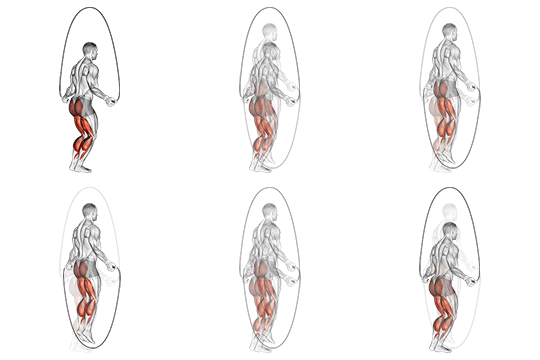
How to Jump Rope With Proper Form
Choose a workable rope length: use a rope that clears your body without requiring the hands to spread far from the hips. Beginner ropes are often slightly longer than speed-focused setups.
Set your posture: stand tall with the head neutral, shoulders relaxed, elbows down and slightly behind the torso, and hands near hip level.
Use the wrists to turn the rope: keep arm movement small and create most of the rotation with quick wrist motion rather than large shoulder circles.
Start with low single bounces: jump only high enough for the rope to pass underneath and keep the knees softly bent.
Land quietly: contact the floor softly through the forefoot or midfoot and allow the ankles and knees to absorb force without collapsing.
Match one turn to one jump: establish a repeatable basic-bounce rhythm before increasing speed or changing footwork.
Reset after misses: stop, reorganize the rope and hand position, then restart rather than adding large recovery jumps.
Build volume gradually: calves, feet, and lower-leg tissues may fatigue quickly when you are new to repeated jumping, so increase intervals over time.
Form Check & Technique
DO THIS (Technique Tips)
- Keep jumps low.
- Land softly.
- Keep the torso tall and relaxed.
- Turn the rope mainly with the wrists.
- Keep the hands near hip level.
- Learn the basic bounce before tricks.
- Use short intervals when starting.
- Increase volume gradually.
AVOID THIS (Common Mistakes)
- Jumping Too High — Fix: clear the rope with low, efficient hops.
- Turning From the Shoulders — Fix: use small wrist rotations.
- Hands Drifting Wide — Fix: keep them closer to the hips and reassess rope length.
- Elbows Flaring Forward — Fix: let the elbows stay down and slightly back.
- Landing Hard — Fix: use quiet, springy contacts and reduce jump height.
- Double Bouncing Between Rope Turns — Fix: slow the rope and establish one jump per turn.
- Rope Too Short for Current Skill — Fix: use a slightly longer setup until hand position and rhythm improve.
- Doing Long Sessions Immediately — Fix: build total jumping time gradually.
About Jump Rope
Jump rope, also called skipping rope, is a rhythmic bodyweight cardio and plyometric exercise that combines repeated low hops with continuous rope turnover. The calves handle repeated ankle spring and landing, while the quadriceps, hamstrings, glutes, feet, shoulders, forearms, and core help stabilize and coordinate the movement. Good jump rope form uses a rope that fits your height and skill, relaxed elbows near the sides, small wrist-driven rotations, low jumps that only clear the rope, and soft controlled landings. Beginners should first learn single-bounce rhythm before adding faster footwork, weighted ropes, or double-unders.
Jump Rope Muscles Worked
Jump rope is a repeated elastic lower-body task.
- The calf complex contributes strongly to ankle stiffness, takeoff, and landing, while the quadriceps, hamstrings, and glutes stabilize the lower body.
- Forearm and wrist muscles turn the rope, the shoulders hold arm position, and the core helps maintain an upright rhythm.
- Training studies show jump-rope programs can improve several fitness qualities, although much of the published intervention evidence involves children and adolescents.
Sets & Reps Guidance
Technique / Learning
Beginner technique: 5–10 rounds of 20–30 seconds of basic-bounce practice with 30–60 seconds of rest and frequent resets after misses.
Strength Focus
Higher-intensity intervals: 6–10 rounds of 20–45 seconds of fast but controlled skipping with enough recovery to preserve rhythm.
Muscle Growth (Hypertrophy)
Aerobic conditioning: accumulate 10–20 minutes of skipping through 1–3 minute work intervals with short rests, adjusting volume to impact tolerance.
General training baseline. Need.fit automatically adjusts exact sets, reps, and working weight based on your individual fitness level, recovery, and progress over time.
Exercise Variations & Alternatives
Running
A locomotion-based cardio exercise that develops aerobic fitness without rope timing.
Rowing Machine
A machine-based full-body cardio exercise with no repeated landing impact.
Mountain Climber
A dynamic plank conditioning exercise with alternating knee drives.
Burpee
A full-body conditioning exercise that combines floor transitions and jumping.
Barbell Bench Press
Learn proper barbell bench press form, muscles worked, grip and bar-path cues, common mistakes, and practical sets and reps for strength or muscle.
Dumbbell Bench Press
Learn dumbbell bench press form, muscles worked, setup, range-of-motion cues, common mistakes, and practical sets and reps for controlled chest training.
How Long Should a Jump Rope Be?
Rope length depends on body size, rope type, hand position, and skill.
- A beginner usually benefits from slightly more clearance, while experienced jumpers often shorten the rope for faster turnover.
- The key test is that you can keep the hands near the hips and clear the rope without excessively high jumps.
Should You Turn the Rope With Your Wrists or Arms?
Use small wrist-driven rotations while the elbows stay down and relatively close to the torso. Large shoulder circles waste energy and often make the rope path inconsistent.
How High Should You Jump When Skipping Rope?
Only jump high enough for the rope to clear your feet.
- Beginner guidance commonly uses very low hops rather than exaggerated jumps.
- Higher jumps increase impact and slow rhythm without helping the basic bounce.
Basic Bounce vs Alternate-Foot Jump Rope
The basic bounce uses both feet together and is the best place to learn timing. Alternate-foot or running-step skipping shifts weight from side to side and can feel more natural during longer conditioning intervals once rope control is established.
Speed Rope vs Weighted Jump Rope
Speed ropes are light and responsive but provide less feedback to beginners.
- Heavier ropes move more slowly and can make rope position easier to feel, while increasing upper-body effort.
- Neither is universally better; match the rope to your skill and goal.
When Should You Learn Double-Unders?
Learn consistent single-unders first. Double-unders require a higher jump and faster rope turnover, so adding them before basic rhythm is stable often creates excessive arm movement and repeated misses.
How to Start Jump Rope Without Calf or Shin Overload
Start with short intervals, use a forgiving surface, keep hops low, and increase total jumping time gradually. Repeated jumping can create significant lower-leg fatigue even when cardiovascular fitness is already good.
Jump Rope Benefits
Jump-rope training is portable and time-efficient and can develop cardiorespiratory fitness, coordination, jumping ability, and other fitness qualities. A systematic review found small-to-moderate improvements across several outcomes, but most included participants were young, so adult results should not be exaggerated from that evidence.
Sources & References
- [1]
- [2]
- [3]Jump Rope Training Effects on Health- and Sport-Related Physical Fitness in Young Participants: A Systematic Review With Meta-analysis — PubMed (PMID: 36121177)View Source