
Hammer Curl
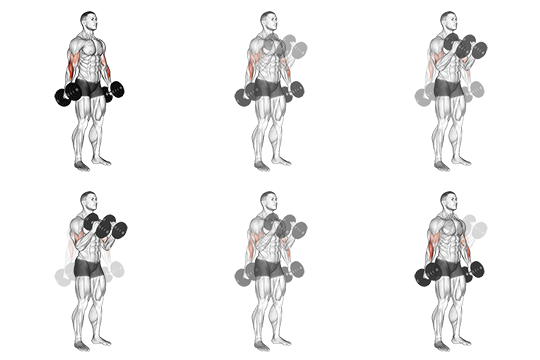
How to Do a Hammer Curl
Hold the Dumbbells With a Neutral Grip: Stand up straight with feet shoulder-width apart, holding a dumbbell in each hand with your palms facing each other.
Stand Tall: Keep your shoulders back, chest up, and core engaged, holding the dumbbells extended beside your thighs.
Keep Wrists Neutral: Maintain a firm, neutral wrist position throughout the exercise without supinating or extending your wrists.
Curl Through Elbow Flexion: Bend your elbows to lift the dumbbells upward in a forward arc while keeping your upper arms still near your torso.
Maintain the Neutral Grip: Keep your palms facing each other continuously as the dumbbells rise, avoiding any wrist twisting at the top.
Reach a Controlled Top: Squeeze your arm flexors firmly near peak contraction without swinging your shoulders or hips.
Lower Slowly: Lower the dumbbells smoothly back to full arm extension over a 2-second eccentric descent before initiating the next rep.
Form Check & Technique
DO THIS (Technique Tips)
- Hold dumbbells with neutral palms-facing grip.
- Keep wrists firm and un-rotated.
- Curl dumbbells up using elbow flexion.
- Keep upper arms still near sides.
- Squeeze brachialis and biceps at top.
- Lower weights under control over 2 seconds.
- Try cross-body variation for variety.
- Progress loading without swinging body.
AVOID THIS (Common Mistakes)
- Rotating palms upward — Fix: Maintain a strict neutral palms-facing grip from start to finish.
- Swinging dumbbells — Fix: Reduce load and keep your glutes and core braced.
- Using shoulder momentum — Fix: Keep your upper arms pinned near your torso.
- Letting wrists bend — Fix: Maintain a firm, neutral wrist alignment under load.
- Overloading because hammer curls feel strong — Fix: Preserve strict range of motion and controlled lowering.
- Turning standard hammer curl into cross-body unintentionally — Fix: Maintain a consistent forward arm path unless programming cross-body intentionally.
- Dropping the eccentric — Fix: Lower the dumbbells slowly over 2 seconds.
- Assuming neutral grip eliminates biceps involvement — Fix: Understand that the biceps still contributes significantly.
About Hammer Curl
The hammer curl is an effective dumbbell elbow-flexion exercise performed with a neutral palms-facing grip throughout the entire range of motion. It trains the biceps brachii, underlying brachialis, and brachioradialis while maintaining a distinct forearm orientation from standard supinated bicep curls. By keeping the forearms neutral, the hammer curl shifts mechanical leverage onto upper-arm thickness and outer forearm musculature while reducing wrist joint strain across balanced upper-body programs.
Muscles Worked by the Hammer Curl
The hammer curl targets the primary elbow flexors with a neutral grip.
- The brachialis, situated directly beneath the biceps brachii, generates substantial flexor force in this position.
- The brachioradialis on the thumb side of the outer forearm is heavily engaged, while the biceps brachii contributes strongly to lifting the weight without requiring forearm rotation.
Sets & Reps Guidance
Technique / Learning
General muscle building: 2–4 sets of 6–15 reps with controlled dumbbell weight.
Strength Focus
Higher-rep volume: 2–4 sets of 10–20 reps focusing on forearm and arm pump.
Muscle Growth (Hypertrophy)
Heavy accessory: 3–4 sets of 8–12 reps taken near technical failure.
General training baseline. Need.fit automatically adjusts exact sets, reps, and working weight based on your individual fitness level, recovery, and progress over time.
Exercise Variations & Alternatives
Dumbbell Curl
Supinated dumbbell biceps curl.
Barbell Curl
Bilateral underhand barbell curl.
Preacher Curl
Learn preacher curl form, muscles worked, bench and pad setup, bar and grip options, bottom-range loading, common mistakes, comparisons, and sets and reps.
Concentration Curl
Learn concentration curl form, muscles worked, upper-arm and inner-thigh setup, common mistakes, curl comparisons, variations, and practical sets and reps.
Barbell Bench Press
Learn proper barbell bench press form, muscles worked, grip and bar-path cues, common mistakes, and practical sets and reps for strength or muscle.
Dumbbell Bench Press
Learn dumbbell bench press form, muscles worked, setup, range-of-motion cues, common mistakes, and practical sets and reps for controlled chest training.
Why the Neutral Grip Matters
Maintaining a neutral grip (palms facing each other) throughout the movement disengages the supinating function of the biceps brachii. This mechanical position shifts a greater portion of the flexor workload onto the powerful brachialis and brachioradialis muscles, enhancing upper-arm thickness.
Does the Hammer Curl Work the Brachialis?
Yes, the brachialis lies directly underneath the biceps brachii and is a powerful elbow flexor. Because the brachialis attaches to the ulna, its mechanical leverage is unaffected by forearm rotation, making hammer curls an ideal exercise to target arm thickness and flexor strength.
Does the Hammer Curl Train the Brachioradialis?
Yes, the brachioradialis runs along the top of the outer forearm and assists with elbow flexion when the forearm is in a neutral or semi-pronated position. Hammer curls build both upper-arm thickness and outer forearm muscle volume.
Standard vs Cross-Body Hammer Curl
Standard hammer curls lift the dumbbells straight forward beside your body. Cross-body hammer curls sweep the dumbbell across your chest toward the opposite shoulder, altering shoulder angle and providing a unique stretch on the brachialis.
Hammer Curl vs Regular Dumbbell Curl
Regular dumbbell curls rotate to a palms-up (supinated) grip at the top to emphasize the biceps brachii. Hammer curls maintain a neutral grip from bottom to top to engage the brachialis and forearms heavily throughout every rep.
Should You Rotate Your Wrist?
No, standard hammer curls require keeping the palms facing each other throughout the entire repetition. Twisting the wrist turns the movement into a standard supinated curl, losing the neutral grip's specific benefits.
Can You Use More Weight on Hammer Curls?
Many lifters can handle slightly heavier dumbbells on hammer curls than on standard supinated curls because the neutral grip recruits the combined, coordinated flexor strength of the biceps, brachialis, and brachioradialis working together.
Elbow Joint and Tendon Loading Dynamics
The neutral grip used during hammer curls reduces rotational strain across the distal biceps tendon and wrist joint. This neutral forearm position distributes mechanical tension across the brachialis, brachioradialis, and forearm flexors, making it a comfortable option for high-volume arm training.
Sources & References
- [1]Differences in Electromyographic Activity of Biceps Brachii and Brachioradialis in Hammer Curls — PMC (PMC6047503)View Source
- [2]Impact of Forearm Orientation on Arm Flexor Recruitment Patterns — PubMed (PMID: 36976950)View Source
- [3]Surface EMG Analysis of Brachialis and Forearm Flexor Activation — PubMed (PMID: 28011412)View Source
- [4]
- [5]Forearm Kinematics and Wrist Stability in Neutral Grip Movements — PubMed (PMID: 41335596)View Source
- [6]
- [7]